
Learning What Home Can Be
Off CampusThis thread traces how Tom Worthington moves from treating home as lost property and solitary survival toward recognizing belonging as a place made through dependable people and shared daily life.
increasing Bearing strength in each event
 decreasing
Bearing strength in each eventdecreasingThe Inherited House

Home as a Lost Inheritance
The material collapse
Tom’s former life is dismantled along with his father’s assets. The family home and possessions are no longer a secure base, and the wealth that once made the future appear effortless has become part of the legal and financial fallout.
A house without refuge
Even before everything is sold, the home stops feeling private when reporters wait outside and watch the family. Tom can remain inside its walls yet still feel exposed, unable to leave without encountering the public story attached to his name.
The loss is therefore more than a change in address. Tom loses both material security and the sense that a home can shield its occupants from the outside world, making later offers of shelter difficult for him to trust.
A Bed Behind a Locked Door
Shelter Before Belonging
Arrival in exhaustion
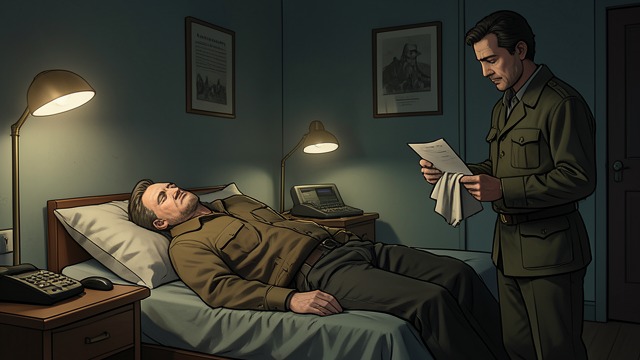
After months of unstable housing and long driving shifts, Tom arrives at Frances Perkins House expecting a bed and finds that his assigned room is already occupied by Reese Anders. The mix-up begins with hostility, but exhaustion leaves Tom with little interest in defending an ideal version of his independence.
The first small kindness
Reese initially protests that Tom should not be there, then makes room and lets him sleep on the bed. He even leaves a note explaining that Tom can use the better sheets, an unexpectedly considerate gesture in an awkward situation.
For Tom, the room is not yet home; it is a place to sleep without moving on. Still, the first night introduces the possibility that shelter can arrive through another person’s ordinary kindness rather than through wealth or a formal guarantee.
A Place Called Right

Belonging in Repetition
Roommate life takes shape
Tom and Reese Anders move from open antagonism toward a fragile routine. They share meals, study in the same room, and learn small practical habits that make their cramped quarters feel less like an assignment and more like a lived-in place.
The doorway changes meaning
Tom once approached room 23B as a temporary refuge from the road. Later, seeing the door slightly open and stepping inside, he recognizes the room as somewhere he can return without having to explain himself first.
That recognition is not based on comfort alone. It rests on the fact that Reese has begun to notice Tom’s rhythms and that Tom, despite his fear of dependence, has started to expect another person to be there. Home begins as a shared practice before either man knows what to call it.
The Kitchen That Holds Them
Witnessing a Family
An unfamiliar domestic rhythm
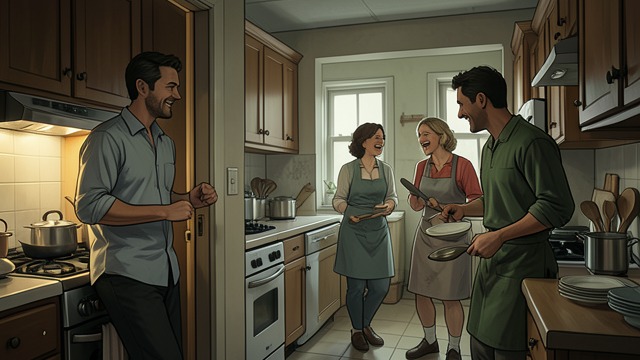
At the Anders home, Tom watches Reese and Mr. Anders move through breakfast and holiday preparations with easy teasing, practical arguments, and casual affection. They talk while cooking and clearing the table, treating time together as ordinary rather than ceremonial.
A different model of closeness
Tom compares this warmth with his own relationship with his father, which had often centered on lessons, status, and preparation for adult success. The Anders family’s everyday conversation makes him recognize how little of that ordinary, mutual ease he experienced growing up.
The home unsettles Tom because it offers a kind of belonging he has not learned how to enter. When Reese invites him upstairs rather than leaving him on the couch, Tom chooses to follow, taking a small but meaningful step toward being included.
The New Shared Address

A Future With Room
From temporary quarters to a home of their own
Tom and Reese Anders return to Carlisle and move into a suite with separate bedrooms, a shared common room, and a view of the campus green. Its space and comfort contrast sharply with Tom’s earlier experience of living out of a car and treating each place as temporary.
Belonging without isolation
The suite is not a retreat from everyone else: Cash and Steph help them move in, and the friends quickly become part of the room’s lively domestic space. Tom can share a home with Reese while remaining connected to people beyond the couple.
When Tom pauses at the new room number, the old unease about being watched still flickers. But Reese is waiting nearby, and the move represents something Tom once could not imagine: a place he has helped choose, a relationship he can name, and a future that is not built on inherited wealth.
After Tom’s father is arrested and the family assets are frozen
On Tom’s first night at Frances Perkins House
After the roommates begin sharing ordinary evenings
On Christmas Day at the Anders home
Four months after the reconciliation, during the move into their suite
